
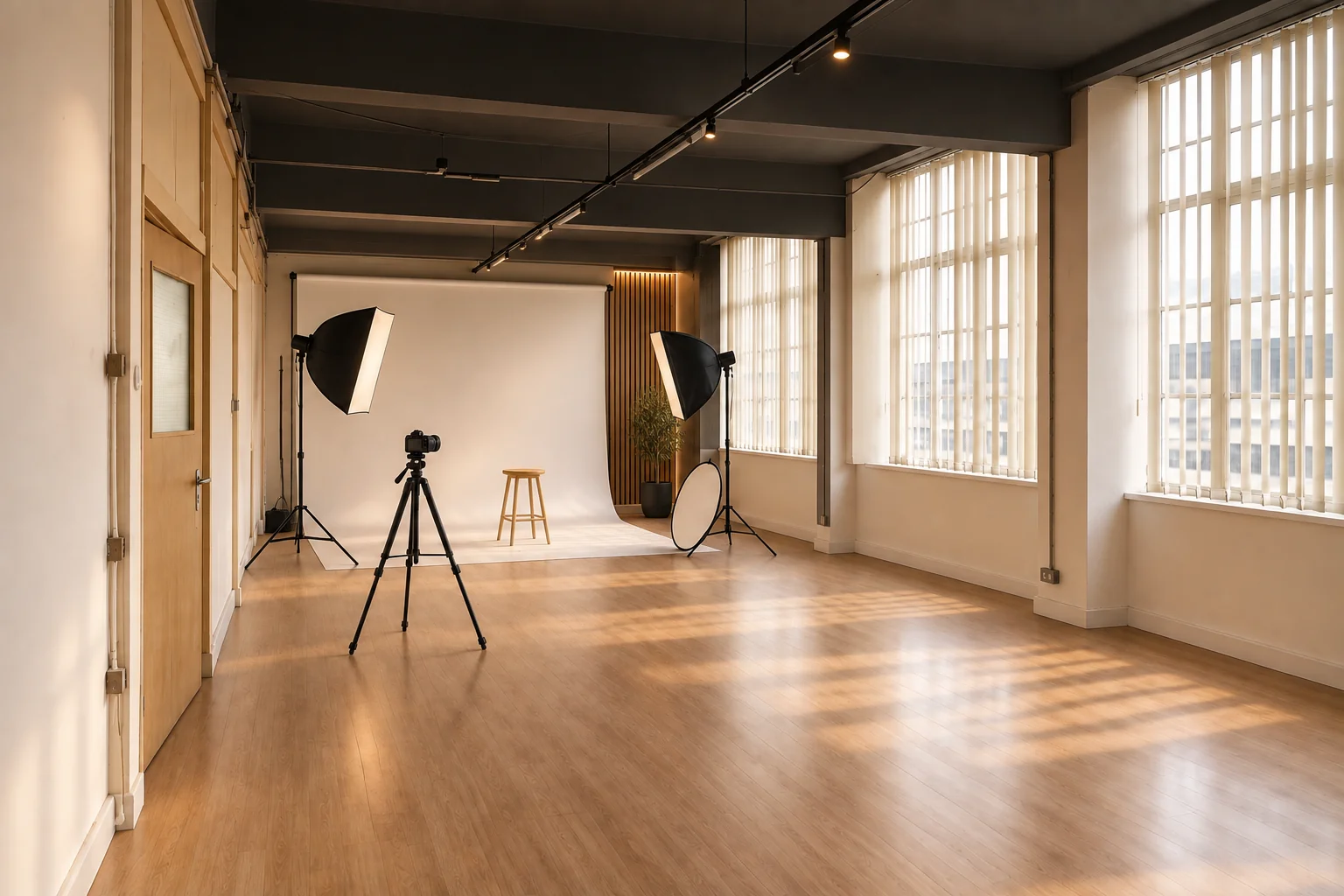
An affordable shoot is one that produces the images you need within a budget you understand. A low room price cannot rescue an unclear brief, an unprepared subject or a product list that changes halfway through the session. Equally, a well-planned short booking can support focused work without a complicated production. This guide explains how to judge value, organise the brief and use Studio A at Patmos in Leicester as a practical reference for your planning.
Make a studio booking affordable by prioritising essential images, grouping similar setups and preparing subjects and products before arrival. Studio A at Patmos in Leicester is listed from £30 per hour with a two-hour minimum. Review the selected booking total, confirm equipment requirements and budget separately for any people or services your production needs.
What does good value mean for your photography brief?
Define the images by their use. A small business may need a website portrait, a horizontal banner and a set of product details. Those are distinct deliverables even if they can share a lighting arrangement. Record the subject, intended channel and necessary crop for each. This gives the photographer a useful target and prevents the session from expanding into a vague request for lots of content. The budget should support a clear set of useful outputs, not an arbitrary number of shutter presses.
Separate required images from desirable variations and experiments. If the essentials take longer than expected, the team should know which optional ideas can move to another session. Decide who can approve a setup and what they are checking: product accuracy, expression, framing or consistency with the brand. Without that agreement, several people may ask for conflicting changes while booked time passes. Good value often begins with a smaller decision process, long before anyone adjusts a light.
How do you build a complete shoot budget?
Start with room hire, then list the separate work your production needs. Depending on the brief, that may include a photographer, styling, image selection or editing arranged by you. Do not infer those services from a studio photograph or a hire price. Ask what is included and who is responsible for providing the rest. Keep confirmed amounts separate from estimates so the apparent affordability of the room does not hide costs that still need an owner.
Studio A is listed from £30 per hour and has a two-hour minimum. Review the actual price for your chosen duration in the booking flow rather than assuming every longer session follows a simple multiplication. Compare complete shoot plans on the same basis: required outputs, booked window and separately arranged work. A plan that produces fewer but usable images may be a better fit than one with an impressive list that leaves no time for careful execution or selection afterwards.
Which preparation saves the most time in the room?
Get the subjects and objects ready before the booking. Choose clothing combinations, check product samples and remove unnecessary packaging where appropriate. Make a list of the items that must appear and identify any flaws that could affect close photographs. Bring alternatives where an important choice is uncertain, but decide who will make the final call. Searching through an unlabelled collection of products or discussing every outfit from scratch can consume time that was intended for refining the images.
Prepare a concise visual reference with notes about what you like: direction of light, colour relationship, framing or mood. A reference is useful when it communicates a decision, not when it asks the photographer to reproduce unrelated images exactly. Send the brief to the people involved before the day and ask them to flag practical concerns. Confirm the equipment your particular method needs with Patmos, including compatibility questions, so the team arrives with a workable approach rather than a list of assumptions.
How can you organise setups without flattening the creative work?
Group images that share a backdrop, lighting direction or subject. Capture the essential variations within that arrangement before making a major change. For a product session, front views and details might be grouped by size or finish; for portraits, a sequence may follow clothing changes. The photographer should decide what is practical, but the whole team benefits from understanding the order. Repeatedly rebuilding an earlier setup can waste time and introduce small inconsistencies that make the final set harder to use together.
Keep a little space for discovery within each setup. A promising expression or composition may deserve another attempt, while an idea that looked strong on a mood board may not suit the subject. Use the priority list to decide how far to explore. Mark a setup complete only after checking the essential frames, then move on deliberately. Efficiency should protect thoughtful work by reducing unnecessary transitions; it should not turn the session into a race through an untested checklist.
What can you safely assume about Studio A?
The published Studio A features include a flexible, light-controlled studio, professional lighting, a backdrop system and a changing and preparation area. Its stated uses include portraits, fashion, products, video and content production. Those facts help establish whether the room belongs on your shortlist. They do not specify every accessory, camera system or specialist modifier. If a precise item is necessary for your technique, name it and confirm the arrangement before relying on it in the schedule.
Studio A and Studio B can be booked independently at the same time. The Space, however, blocks Studio A because it uses the main floor, while Studio B remains separate. For a combined project, check the availability of the products you need rather than assuming a larger meeting booking adds photography access. Keep the enquiry focused on the result, team size and practical needs. This helps distinguish an ordinary room reservation from a more involved production that requires further planning.
How do you protect the images you have already made?
Agree who checks the captures and when. Before changing a setup, review the important frames for focus, composition, product details and any required space for text. A small issue found early can often be corrected within the current arrangement; finding it after everyone leaves may create a much larger problem. The check should be purposeful and limited to the essentials so the team does not spend the whole booking scrolling through near-identical images.
Define file handling with the photographer or person operating the camera. Confirm who keeps the originals, who performs selection and what the intended delivery process is. These are production responsibilities and should not be assumed to come with the room. Allow the operator time to finish their chosen recording and backup process before packing away. The booking has served its purpose only when the work can move safely into the next stage, whether that is editing, approval or publication.
What is a sensible next step for a limited budget?
Write a one-page brief with a small set of essential deliverables, the people involved and a realistic sequence. Ask the photographer to estimate setup, shooting, changes and wrap against that brief. If the planned session exceeds the budget, reduce the number of looks or subjects before removing all contingency. One consistent group of finished images can be more useful than an unfinished selection from several ambitious concepts, particularly when the work must support a specific launch or update.
Then explore the Patmos photography service and check Studio A for a suitable booking window. Confirm specific equipment needs, review the total for the selected duration and share the final schedule with collaborators. Arrive with prepared items and a clear approval route. After the shoot, note which preparations saved time and which decisions slowed the team down. That record will improve the affordability of the next session more reliably than repeatedly searching for a lower headline rate.
Useful answers
Questions about planning your booking
What are Studio A's published hire terms?
Studio A is listed from £30 per hour with a two-hour minimum. Check the booking flow for the full price of the date and duration you choose. Build setup and wrap into that window, not just active photography.
Does studio hire automatically include a photographer or editing?
Do not assume production services are included with room hire. Identify who will photograph, select and edit the work, then confirm any service you want to arrange. Keep those responsibilities and costs separate from the room reservation.
How many finished images should I expect from two hours?
There is no reliable universal number. Output depends on the subjects, lighting changes, preparation and approval process. Ask the photographer to plan against a prioritised brief and define the delivery arrangement separately from the studio booking.