
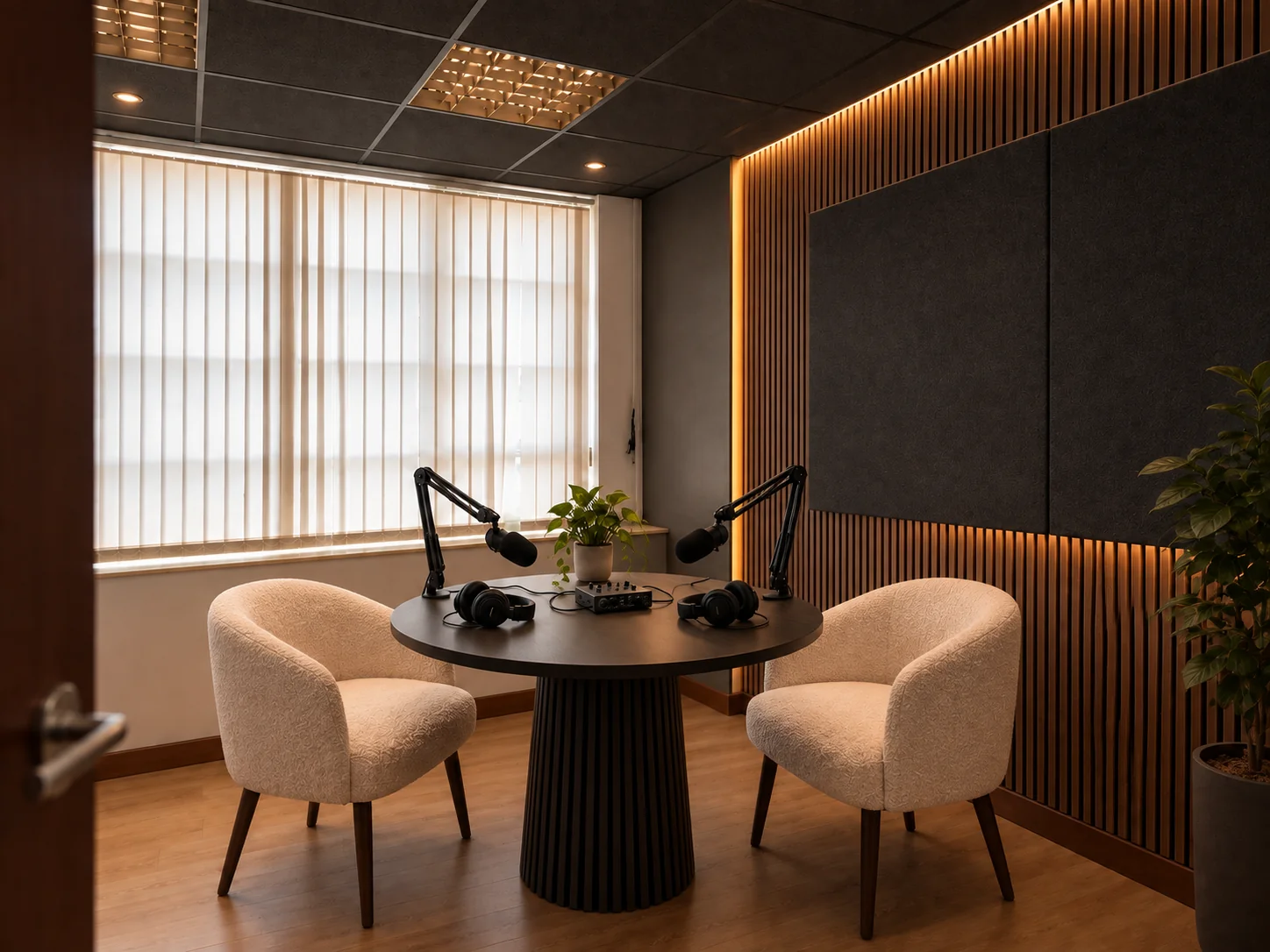
A video podcast asks the audience to watch as well as listen. That changes how you plan the set, clothing, eye-lines and clips, but it should not make the conversation feel stiff. Whether you are recording an interview, founder discussion or expert series in Leicester, a clear editorial plan helps the people on camera focus on the subject. This guide covers five practical decisions to make before a video podcast studio session and shows where Patmos Studio B fits into the plan.
Give each episode one clear promise
Write the question the episode will answer for its audience. A broad theme such as entrepreneurship or wellbeing is too loose to guide a conversation. A more useful promise states what a listener will understand or be able to do by the end. Use that promise to choose the guest, opening and three or four discussion stages. The result should feel purposeful without becoming a script of every sentence.
Tell the guest who the audience is and what the episode will cover. Share any factual or sensitive areas in advance, agree how corrections will be handled and confirm names and titles. A guest who understands the purpose can bring useful examples. A guest handed a rigid list of twenty questions may only prepare short answers and lose the natural rhythm that makes a conversation worth watching.
Plan what the viewer sees when nobody is speaking
Decide how many people will be on screen and whether they will mainly address each other or the camera. Keep the background relevant and avoid visual details that compete with faces. Clothing should suit the tone and remain comfortable for the whole recording. Jewellery or fabric that repeatedly makes noise can affect the audio as well as the visual result, so test uncertain items.
Studio B at Patmos is a warm, camera-ready podcast room with podcast microphones and professional lighting. It supports up to four speakers and is suited to interviews and talking-head video. These confirmed features provide a starting environment; the production still needs decisions about cameras, framing, recording and editing responsibilities. Confirm anything your project specifically requires rather than assuming all production services are included in room hire.
Protect the audio while building the picture
A beautiful frame will not compensate for an unclear conversation. Ask participants to silence devices, keep notes and objects away from microphones, and allow a short test before the formal opening. The host should listen for an answer that has become too long or unclear and ask a focused follow-up. If an important sentence is interrupted, pause and repeat it cleanly instead of hoping it can be repaired later.
For video, also notice continuity. Moving a glass, changing a jacket or shifting a chair between takes may be more visible than an audio edit. Keep a simple note of resets and strong moments. A small team can do this without a complex production desk, provided one person is responsible for tracking what happened.
Plan short clips without sacrificing the full episode
If you want clips for social channels, identify ideas that can stand alone. A useful clip makes one claim, example or explanation intelligible without the previous ten minutes. The host can sometimes invite a concise restatement after a longer discussion: what is the one thing someone should remember? Record that line naturally, rather than interrupting every answer to manufacture a soundbite.
Note the likely platform shapes before recording so framing leaves room for vertical and horizontal crops where needed. This does not mean every camera should be fixed to one social format. It means the production team knows which outputs matter and checks that the selected composition can support them. Editing, captions and final publishing need their own plan after the studio session.
Book for the entire recording workflow
Include guest arrival, briefing, seating, tests, the full conversation, pauses, alternate introductions and wrap. The published episode length is not the booked session length. A two-hour minimum may suit one focused discussion, but several episodes or a complex visual format need a more generous schedule. Studio B is listed from £40 per hour and remains independently bookable when The Space is in use.
Before you reserve a Leicester video podcast studio, write the episode promise, send the guest brief and decide who owns recording and post-production. Then choose a duration that includes the work around the conversation. Explore the Studio B page for the confirmed room features and contact Patmos about any requirement that needs checking.
Useful answers
Questions about planning your booking
What do I need to plan before recording a video podcast?
Define the episode's audience and promise, brief guests, decide the on-camera arrangement, plan audio checks and assign recording and editing responsibilities.
How many people can record in Patmos Studio B?
Studio B supports up to four speakers. The format and production plan should determine how many voices the episode actually needs.
How long should I book for one video podcast episode?
Allow for arrival, briefing, technical checks, conversation, corrections and wrap. Studio B has a two-hour minimum, but choose a longer session when the workflow requires it.