
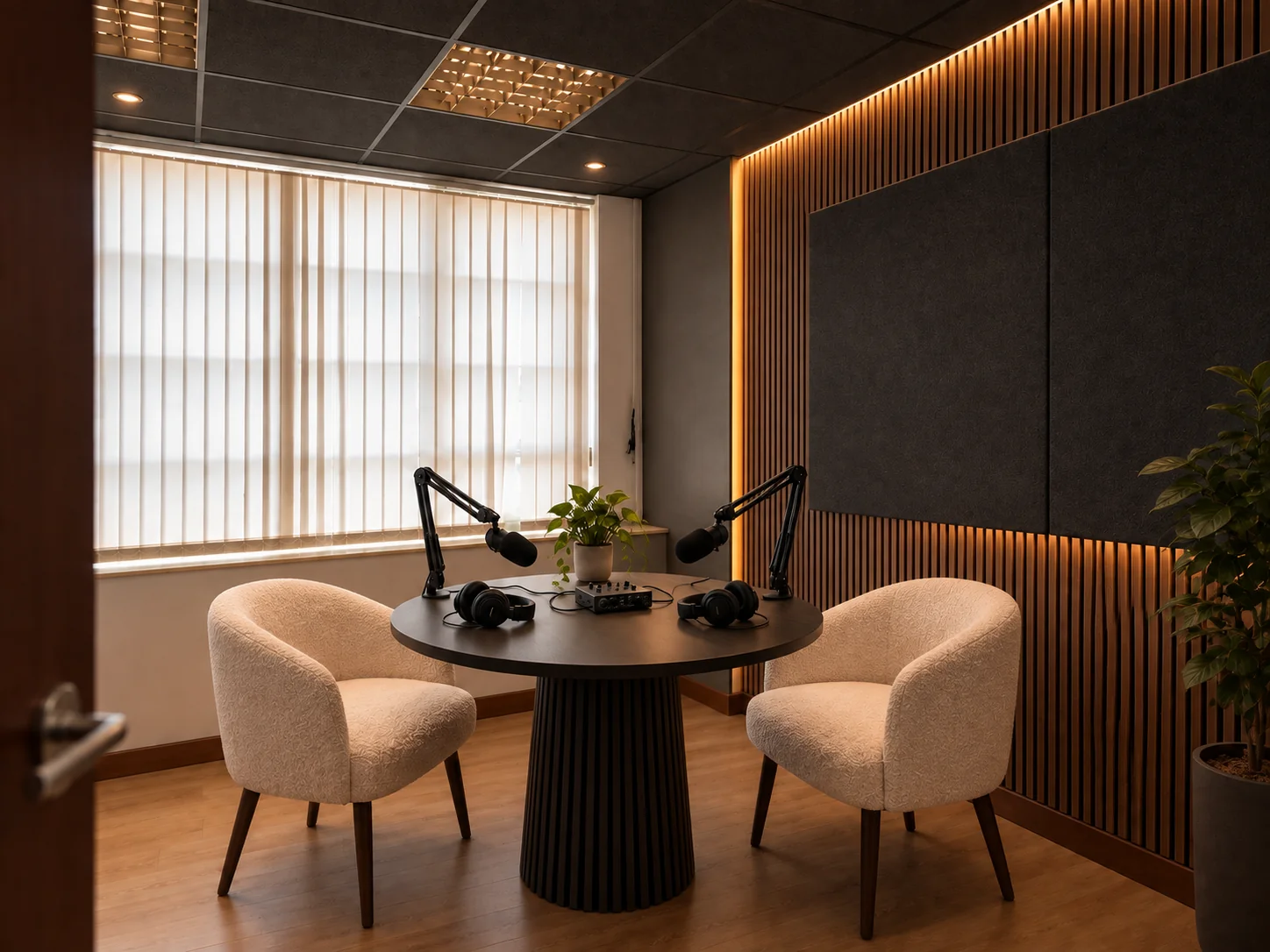
Knowing how to prepare for a podcast studio session changes the quality of the conversation as well as the efficiency of the recording. The goal is not to script every sentence. It is to give the host, guest and production team a shared sense of purpose, structure and timing, so everyone can pay attention to the discussion instead of working out the plan in front of the microphones. This guide covers the episode goal, format, guest briefing, recording outline, clothing and audio considerations, video podcast preparation and booking duration. It also sets out the confirmed features of Studio B at Patmos, a Leicester podcast studio for podcasts, interviews, courses and talking-head video.
Define one episode goal and the listener it serves
Write down what a listener or viewer should understand, feel or be able to do after the episode. A business interview might help an audience understand a difficult decision. An educational conversation might explain a process in an approachable way. A creator episode might entertain while revealing the story behind a piece of work. One clear outcome makes it easier to choose questions and easier to remove interesting material that does not belong in this particular episode.
Describe the intended audience with enough detail to guide the language. An episode for experienced practitioners can move quickly past introductory definitions, while an episode for curious newcomers needs context and examples. Share this description with the guest. They can then decide which stories and explanations will land, rather than assuming a level of knowledge that the audience may not have.
Set a realistic target length, but treat it as an editorial guide rather than a promise that every recorded minute will be published. The recording may include restarts, pauses and material that is removed later. If the final episode must fit a particular channel or course structure, explain that constraint before the session. A well-defined goal and audience provide the standard for every later decision.
Choose a format that supports the conversation
Decide whether the session is a host-led interview, a co-hosted discussion, a solo explanation, a panel-style conversation or a sequence of short course segments. Each format changes the preparation. An interview needs a question path and a confident introduction. Co-hosts need clear roles so they do not compete to steer. A solo episode benefits from stronger signposts. Short teaching segments need clean starts and endings that will be easy to organise later.
Studio B supports up to four speakers, which gives a firm boundary for an in-room format. Do not fill every available position simply because it exists. More voices can bring range, but they also require more turn-taking and a clearer host. Decide why each participant is present and what perspective they contribute. If someone does not have a defined role in the published conversation, consider whether they need to be part of the recorded group.
Clarify whether audio alone, video alone or both will be captured for the project. Even when the core product is a podcast, video may influence clothing, posture, eye-lines and how visual references are explained. A camera-ready set does not remove the need to choose a format; it gives the format a consistent environment. Make the distribution decision early enough that every participant can prepare for the actual recording.
Brief the guest without over-rehearsing them
A useful guest brief explains the audience, episode goal, format, expected duration and broad themes. It should also state what will happen on arrival and who will guide the session. Send it early enough for the guest to recall examples, check sensitive facts and ask questions. Avoid surprising them with a major subject in the studio unless spontaneity is genuinely part of the agreed format.
Share themes rather than a rigid script of every question. Exact wording can make a guest prepare polished speeches that sound detached from the host. Themes invite thought while preserving a real exchange. If a precise question concerns legal, financial, confidential or otherwise sensitive information, flag it directly and agree boundaries. The host should know which topics are off limits before recording begins.
Ask for the correct pronunciation of names, organisations and specialist terms. Confirm how the guest wants to be introduced and which role or project is most relevant to the episode. Invite them to bring short notes, but discourage long answers read from a screen unless the format requires a prepared statement. The aim is informed conversation: sufficiently prepared to be valuable, sufficiently responsive to feel alive.
- Episode purpose and intended audience.
- Recording format, participant roles and target length.
- Broad themes, sensitive boundaries and required facts.
- Arrival plan, contact details and clothing guidance for video.
Build a flexible recording outline
Structure the outline in stages: opening, context, main discussion, practical takeaway and close. Under each stage, write the essential question or point and a small number of optional prompts. This gives the host a route through the episode without forcing the conversation to follow a script. If the guest raises a valuable example early, the host can follow it and return to the route later.
Write an opening that identifies the subject and gives the audience a reason to continue. The introduction can be recorded in the main session or separately, but the host should know the core promise. For the ending, decide what the listener should remember and whether there is an appropriate next action. A good close feels connected to the discussion rather than attached as an unrelated announcement.
Mark facts that must be checked and sections that need a clean standalone take. Course modules, sponsor messages or short social clips may benefit from deliberate starts and stops. Keep these production notes visually separate from questions so the host can scan the outline quickly. Print it or make it available on a quiet device, and assign someone other than the guest to track which required elements have been covered.
Prepare clothing, voices and personal items for clean audio
For any recorded conversation, choose clothing that lets the participant sit and speak comfortably. If video is planned, avoid outfits that distract from the intended visual tone or cause uncertainty against the set. From an audio perspective, pay attention to garments, jewellery or accessories that make repeated rustling, tapping or clicking sounds when the person moves. Test uncertain items before the session and bring a simple alternative where practical.
Encourage normal, rested speech rather than a performed broadcast voice. Guests can warm up by reading a paragraph aloud or talking through their journey to the studio, but they do not need to force extra volume or formality. The host should listen for pace and give the guest permission to pause, repeat an answer or correct a detail. A short reset is easier to work with than a participant rushing because they believe every word must be perfect first time.
Silence or move personal devices away from the active conversation if they are not needed for the outline. Bring water and any essential personal items, but avoid handling objects during answers when the movement could be distracting. Studio B includes podcast microphones, and careful participant preparation helps the recording make good use of them. The room and microphones support the session; attentive behaviour remains part of the audio result.
Plan a video podcast as a visual production
A video podcast needs decisions that an audio-only recording can leave open. Confirm the number of participants, the intended framing and where each person should direct their attention. In an interview, speakers will usually engage with one another; in a course or talking-head piece, the presenter may address the audience more directly. Agree this before the first take so eye-lines and delivery remain consistent.
Studio B is camera-ready and includes professional lighting, making it suitable for video podcasts, interviews, courses and talking-head video. These confirmed features provide a prepared environment, but your team should still define the visual identity of the episode. Consider clothing, any visible materials and the balance between a complete long recording and shorter extracts. Avoid introducing props or screens that the audience cannot understand from the chosen frame.
If you want short clips, identify moments with a single clear idea rather than expecting every answer to work out of context. The host can ask for a concise restatement after a strong discussion, provided it does not interrupt the natural flow too often. Keep continuity in mind if a segment will be edited: sudden changes in posture, objects or participant positions can be more noticeable on video than in audio.
Book enough time for setup, conversation and resets
Recording duration is not the same as published episode duration. A session includes arrival, introductions, settling into the set, checking the participant positions, explaining the process, recording, pauses and wrap. A forty-minute episode may require substantially more than forty minutes in the booking once those stages and any restarts are included. Build the estimate from the session workflow rather than the desired edit length.
Studio B has a two-hour minimum booking and is listed from £40 per hour. Use that information to plan, but do not assume the minimum always covers several episodes, extensive course material or a complex video brief. Repeated formats become more efficient when the team knows the process, while a first session may need more orientation. If you plan multiple episodes, allow a reset between them so introductions, notes and participant energy do not blur together.
Protect a small amount of time at the end for any missed line, alternate introduction or concise summary. Tell participants the booked finish and organise the outline so the central conversation concludes before the last minute. When a booking has a disciplined beginning and end, the host can focus on listening rather than constantly checking whether the session is running out of time.
Coordinate Leicester and East Midlands participants
Send one confirmed call sheet with the Leicester location details, arrival time, recording start, expected finish and a day-of contact. Ask every participant to check their own route and respond that they have received the information. Do not publish or promise unverified travel times. The person carrying the outline and making editorial decisions should be scheduled with the same care as the guest because the session cannot begin confidently without them.
Patmos serves creators and organisations across Leicester and the wider East Midlands, including Loughborough, Nottingham, Derby and Coventry. If participants are travelling from several places, set one clear studio call time rather than a chain of individual estimates. Keep the guest informed if the production team needs a short period in the room before the recorded conversation begins.
Ask about specific access requirements and any unusual production items before the booking. This guide does not assume parking, travel conditions or facilities that have not been confirmed. Clear early communication lets the organiser seek accurate information for the particular session and prevents a generic guide from becoming an unreliable promise.
Run a calm arrival, recording and wrap
At the start, introduce the participants, restate the episode goal and explain how corrections will work. Confirm names and titles one last time. Give everyone a moment to become comfortable with the microphones and camera-ready setting. Record a short conversation before the formal opening if that helps participants settle, then make a clear start that the team can recognise later.
During the discussion, the host should listen more than they look at the outline. Use the outline to protect the essential stages, not to interrupt a useful answer. If an answer becomes unclear, ask a focused follow-up. If a mistake matters, pause and repeat the thought cleanly. Note strong moments, factual checks and any section that needs another take so the wrap does not depend on memory.
Before leaving, review the required elements and capture a correction or alternate close while the participants are still in place. Confirm what happens next: who will handle the recording, who will check factual questions and when the guest can expect further communication. Pack personal materials and leave the session with a documented edit plan rather than a vague promise to sort everything out later.
- Confirm names, roles, episode goal and sensitive boundaries.
- Explain pauses, corrections and clean restarts before recording.
- Track factual checks and missed required elements during the session.
- Agree the post-recording responsibilities before everyone leaves.
Decide whether Studio B fits the session
Studio B at Patmos is a warm, camera-ready podcast room for podcasts, interviews, courses and talking-head video. It includes podcast microphones and professional lighting and supports up to four speakers. The room has a two-hour minimum booking and is listed from £40 per hour. It is separate from Studio A and The Space, and it remains independently bookable when The Space is reserved.
Compare those confirmed facts with the episode goal, speaker count, recording format and desired outputs. Decide what your team needs to prepare, which elements require confirmation and how much time the actual workflow demands. A dedicated room is most valuable when the editorial plan is ready enough that participants can use the booking to have a thoughtful conversation.
When your outline and guest brief are complete, review the Leicester podcast studio service page and select a booking duration that includes arrival, preparation, the full recording and wrap. Use the Studio B booking flow to check availability and reserve the podcast room for your session.
Useful answers
Questions about planning your booking
Should a podcast guest receive every question in advance?
Usually, share the episode goal, audience, broad themes and any sensitive or fact-heavy questions. This gives the guest useful preparation without turning the conversation into a series of memorised speeches. Some formats may need exact scripted sections, which should be labelled separately.
How much studio time does a podcast episode need?
Plan for arrival, briefing, participant positioning, the recording itself, pauses, corrections and wrap. The published length is only one part of that schedule. Studio B has a two-hour minimum, while multi-episode or course sessions may need longer.
What should someone wear for a video podcast?
Choose comfortable clothing that suits the intended visual tone and avoid garments, jewellery or accessories that create repeated rustling or tapping. Bring a straightforward alternative if you are uncertain how an item will look or sound in the recording environment.
How many speakers can use Studio B?
Studio B supports up to four speakers. Choose the number of participants according to the format and give every speaker a clear reason to be part of the conversation.