
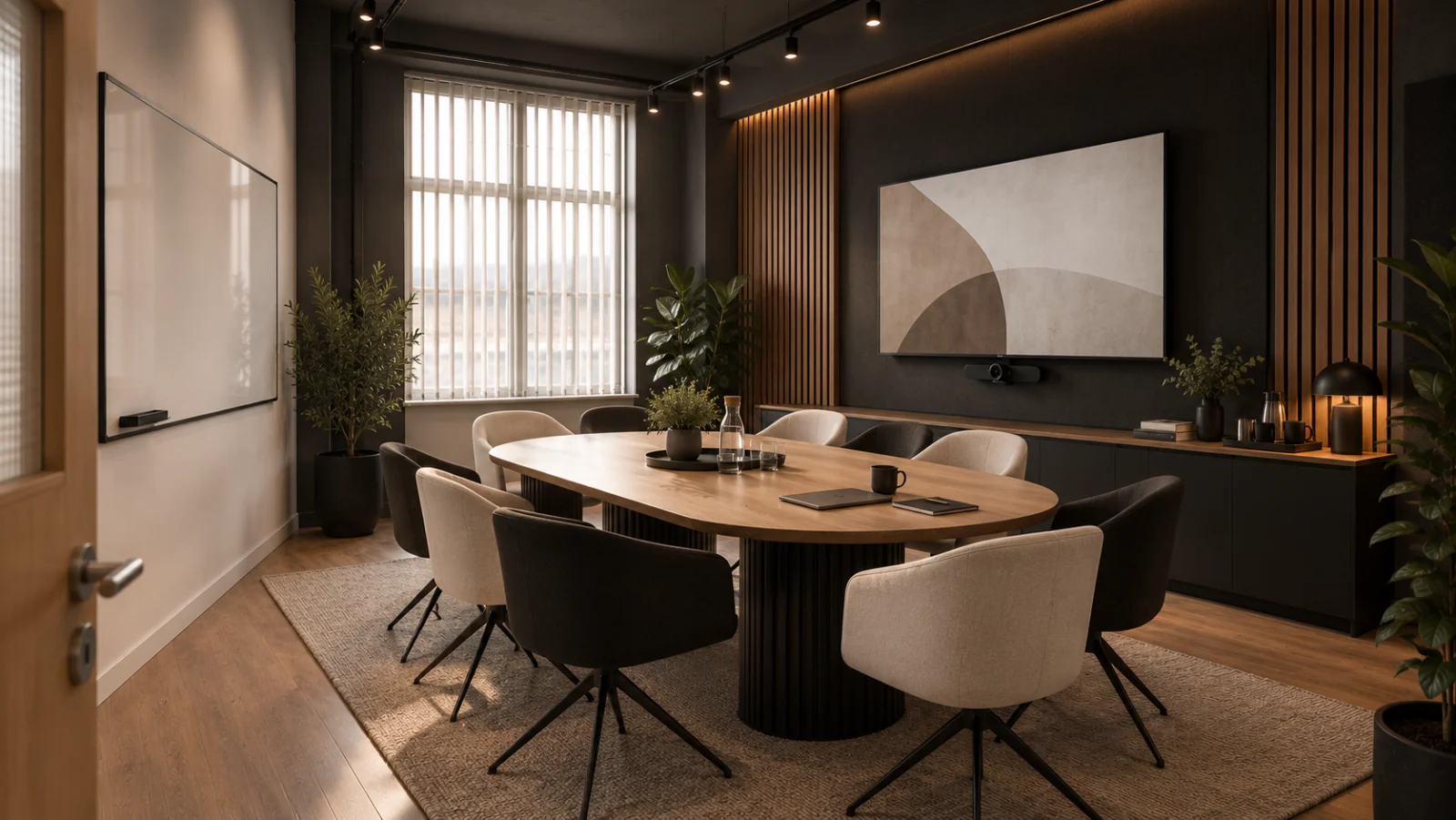
A room price is easy to copy into a spreadsheet. A reliable meeting budget needs more thought: how long the organiser needs access, what the group must achieve, which facilities are essential and who is responsible for each part of the day. This guide helps Leicester teams turn those decisions into a practical budget. It uses the published terms for The Space at Patmos as a concrete reference, without treating an advertised starting price as a complete quote for every meeting.
Budget for the complete booking window, including preparation and wrap, then confirm any requirements beyond room hire. The Space at Patmos in Leicester is listed from £300 with a four-hour minimum. Check the booking flow for the price of your selected duration, and compare venues using the same agenda, headcount and confirmed inclusions.
What are you actually buying when you hire a room?
Start with the outcome. A meeting to approve three decisions needs a different environment from a workshop where participants work in groups and present ideas. Write down what must be finished by the end, then identify the room requirements that support it. A flexible floor may be useful for moving between discussion and practical activity; a brief conversation may need much less. This prevents the budget from becoming a contest between attractive photographs or apparently similar hourly figures.
Separate access to the venue from the work needed to run the meeting. Someone still has to prepare the agenda, facilitate discussion, record decisions and distribute actions. If your plan needs presentation equipment, refreshments or outside suppliers, ask what is available and how it is charged before including it in the budget. A pictured object is not a written inclusion. Record every essential requirement as confirmed, supplied by your team or unresolved, and settle the unresolved items before committing.
How should you calculate the full booking window?
Work backwards from the organiser's departure, not just the final agenda item. Leave time to collect materials, record any last decisions and return the agreed layout. At the other end, account for arranging your materials, checking the room and welcoming participants. These tasks occupy real booked time even when attendees only see the central discussion. Put organiser access and attendee arrival on separate lines in the schedule so nobody assumes the room is available early.
For example, a planning workshop could use thirty minutes of preparation, two hours of discussion, a thirty-minute break and review, and an hour for decisions and wrap. That illustrates how a four-hour window can serve a shorter core agenda; it is not a prescribed Patmos timetable. Test your own version against the number of activities and likely transitions. If the plan does not fit, shorten the agenda or select more time rather than relying on an extension that may be unavailable.
What do the published Patmos terms tell you?
The Space is the Patmos option for small meetings, workshops and collaborative sessions. Its published starting price is from £300, and it has a four-hour minimum. Those facts establish the starting point for comparison. They do not turn the product into an hourly room or establish a price for every possible duration. Use the meeting-room service page for the current commercial description and review the complete price against the time you select in the booking flow.
The Space uses the main studio floor and blocks Studio A for the same period. Studio B remains independently bookable. This matters when budgeting a meeting alongside photography or a recorded interview: a booking for the floor does not automatically include the separate podcast room. If the event needs both, confirm each requirement and its availability. Keep those choices visible as distinct budget items so a colleague cannot mistake a single meeting booking for exclusive use of every Patmos room.
How can you compare quotations fairly?
Send each venue the same short brief: date options, organiser access window, attendee count, meeting purpose and essential requirements. Ask for the complete price for that brief and what it covers. Comparing a short access period at one venue with a longer period at another obscures the real difference. Likewise, an option that needs additional arrangements may still be useful, but those arrangements belong in the comparison rather than being remembered after the purchase.
Create a simple comparison with columns for confirmed booking time, room price, separately arranged costs and unresolved questions. Keep a link or date beside each quote so old information cannot silently become the working budget. Do not assign an invented cash value to facilities you have not confirmed. Where one option is incomplete, mark it incomplete and ask a targeted question. A dependable decision often comes from clarifying one practical detail rather than collecting more quotations with different assumptions.
Where can a small team reduce unnecessary spending?
Prepare the information before bringing everyone together. Circulate background reading, collect questions and identify decisions that need a live discussion. If the first hour would otherwise be spent reading a document aloud, that preparation can change how much room time you need. Give each agenda item an owner and a proposed outcome. Participants should know whether they are contributing ideas, approving a recommendation or resolving a disagreement, because those activities need different amounts of discussion.
Reduce scope before reducing useful preparation time. One well-prepared planning session may be more valuable than combining training, recruitment interviews and a launch rehearsal into the same window. Invite people for their contribution to the agenda rather than to fill the room. Keep optional purchases separate from essentials, and agree who can authorise changes. A modest reserve in your internal budget can help with your own unexpected expenses, but it should not be treated as permission to assume additional venue access.
How do you judge value after the meeting?
Define value in terms the team can observe. Examples include an approved project brief, named owners for each action or a shortlist ready for further evaluation. These are better measures than how many agenda items were read out. Before the booking, decide who will record the result and when it will be shared. A clear output makes it easier to judge whether the chosen room and duration supported the work, and what you would change next time.
Afterwards, compare the planned access window with the activities that actually consumed time. Did late materials delay the start? Did participants need a longer discussion than expected? Was the final review squeezed by too many presentations? Use those observations to improve the next budget instead of assuming the venue was too expensive or the meeting simply needed another hour. The price of the room is only one part of the cost; preparation and follow-through determine how much benefit survives the day.
What should you confirm before booking The Space?
Give the person making the reservation an agreed brief and a clear spending limit. Confirm the date, total booked duration, headcount and any arrangement that is essential to participation. Ask Patmos about requirements that are not described on the service page instead of treating them as standard facilities. Share only confirmed arrival information with attendees. A practical invitation should distinguish when organisers start preparing from when everyone else is expected, and explain the purpose of the meeting.
When the plan fits the four-hour minimum and the available window, open the meeting-room service page and check availability for The Space. Review the displayed total before payment and keep the confirmed booking details with your agenda. Choose a window that leaves room to reach the decisions and close the session properly. If a critical requirement remains uncertain, send Patmos the specific question and your intended activity so the answer can meaningfully inform the booking.
Useful answers
Questions about planning your booking
Is the starting price a quote for any length of meeting?
No. The Space is listed from £300 with a four-hour minimum. Review the full amount for the duration you select in the booking flow. Do not extrapolate a daily rate or an hourly entitlement from the starting figure.
Should preparation sit inside the booking?
Yes. Plan organiser access, arrangement of materials, the meeting itself and wrap within the reserved window. Attendee-facing time is only part of the session, so publish separate organiser and participant timings where that helps.
Is the podcast room part of a meeting booking?
Studio B remains a separate, independently bookable room when The Space is reserved. The Space blocks Studio A because it uses the main floor. Discuss a combined programme before assuming extra rooms are included.