
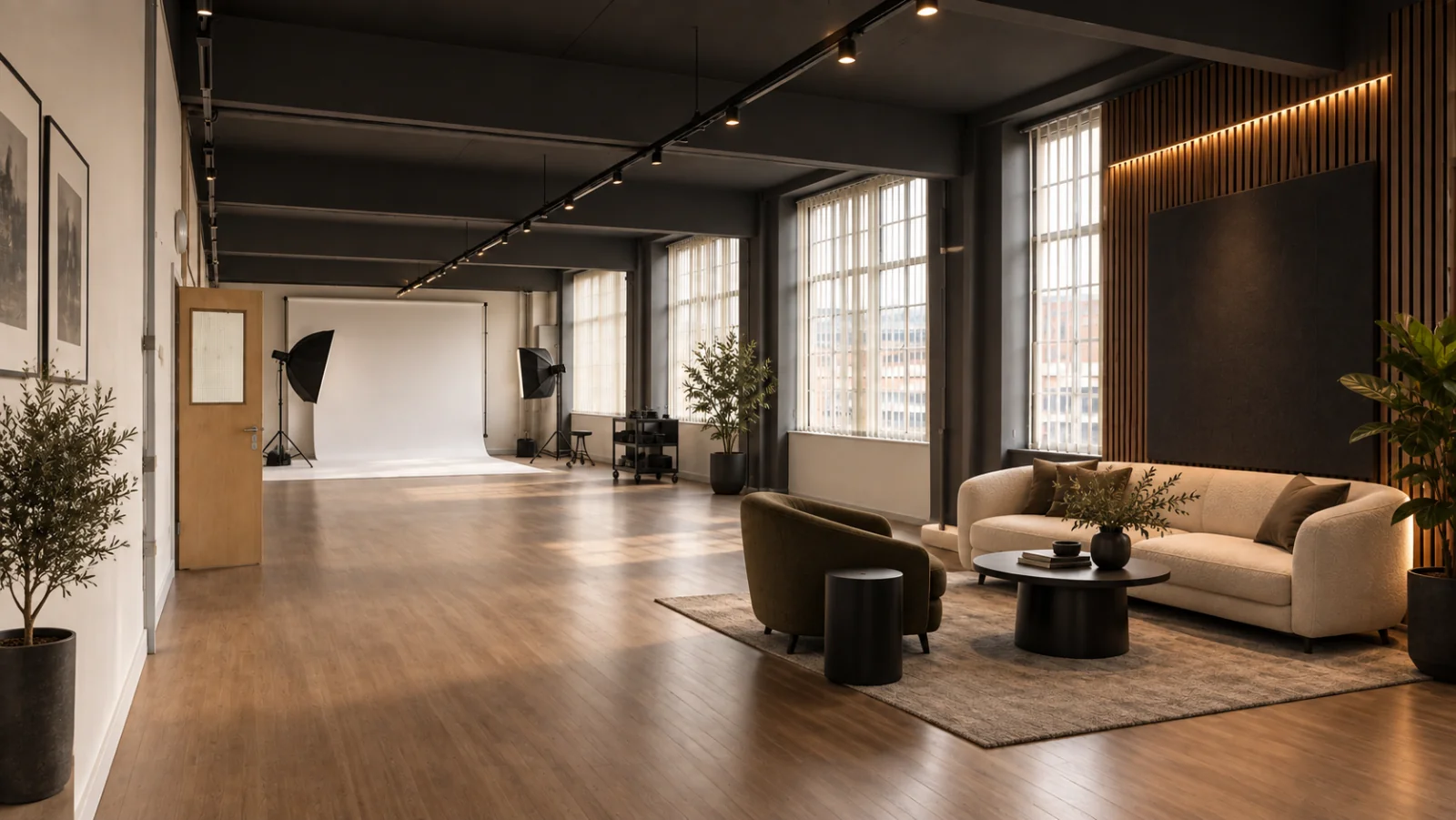
Small meetings can be deceptively demanding. Six people developing a campaign may need more working flexibility than a larger group listening to one speaker, while a confidential discussion creates a different set of questions again. Choosing a room by headcount alone misses those differences. This guide helps you define the activity, assess the practical requirements and prepare a useful session in Leicester, including when the flexible floor of The Space at Patmos may suit your plan.
Choose a small meeting room by the work people need to do, then confirm the layout, participant requirements and full access window. The Space at Patmos in Leicester supports small meetings and collaborative sessions, is listed from £300 and has a four-hour minimum. Ask about specific facilities and suitability before relying on them.
What kind of small meeting are you planning?
Describe the session using a verb: decide, develop, learn, review or rehearse. A decision meeting needs evidence, a clear choice and someone authorised to make it. A development workshop needs room in the agenda for alternatives and revision. A rehearsal needs a sequence that can be repeated. These differences influence the room more than a general label such as team catch-up. Write one sentence explaining what the group will leave with and use it as the starting point for your search.
Next, identify the activities required to reach that outcome. Will people mainly talk together, read individually or work in pairs? Will physical samples or large working documents be involved? List each activity and what participants need to do it comfortably. A room that looks spacious in a photograph may still require a conversation about your proposed arrangement. Avoid assuming a particular layout or equipment package until the venue has confirmed that it can support the plan you actually intend to run.
How much space does a small group need?
Count everyone who will be present, including facilitators, visitors and anyone joining for only one agenda item. Then consider what each person brings. Laptops, sample products, notebooks and workshop materials all change the usable working area. Instead of asking only whether a number of people will fit, describe what they will be doing and ask whether the proposed arrangement is suitable. This gives the venue a better basis for an answer and avoids turning an unconfirmed capacity into an invitation list.
Think about transitions as well as the main layout. Participants may need to move from listening to a presentation into a group discussion or practical exercise. Decide whether that requires moving furniture, moving people or simply changing the task. Check any proposed changes with the venue and allow time to restore the agreed arrangement. The Space offers a flexible studio floor, but flexibility does not mean every configuration is automatically suitable. Bring a simple activity outline to the conversation rather than an elaborate layout based on assumptions.
Which practical questions should you settle early?
Ask participants privately about requirements that affect their ability to take part, then confirm relevant arrangements with the venue. Do not infer access, presentation facilities or support from a photograph or a generic description. If the session depends on a particular connection, display or remote contribution, describe the setup precisely and ask what is available. Prepare an alternative way to share the essential material if the preferred format cannot be supported. That is more useful than arriving with a presentation nobody can view.
Treat sensitive discussion as a specific requirement too. A room suitable for creative collaboration is not automatically a verified setting for every confidential interview or private business discussion. Explain the nature of the requirement without sending unnecessary sensitive detail, and obtain a clear answer before booking. Studio B remains independently bookable while The Space is in use, so a reservation for the main floor should not be described to attendees as exclusive occupation of the entire business. Accurate expectations support a smoother meeting.
How do you build an agenda that suits the room?
Start with individual thinking before open discussion when you want a range of contributions. Give people a short prompt and time to note an answer, then invite each person to speak. This can help prevent the opening opinion from dominating the session. Follow with a focused comparison of the ideas and a decision about what happens next. The technique needs clear instructions more than elaborate equipment, which makes it adaptable to different meeting settings and practical for a small group.
Assign a realistic duration to each activity and leave room for the transition. A workshop might begin with context, move into pair work, return to group discussion and finish with decisions. Mark the must-complete item visibly and put it early enough to survive a slower conversation. If the group runs behind, remove an optional exercise instead of deleting the action review. A room booking is useful when it supports a completed piece of work, not simply when every minute is filled with talking.
When does The Space make sense for a small meeting?
The Space is the Patmos product for small meetings, workshops and gatherings on the flexible studio floor. It may be worth considering when your agenda combines discussion with collaborative work and needs more than a brief appointment. Patmos is in Leicester. The published terms are from £300 with a four-hour minimum, so compare that complete commitment with the programme you need to run. A short meeting with no surrounding activity may not make good use of that minimum duration.
Include organiser preparation, participant welcome and wrap when making the comparison. A longer window can be valuable if it allows a considered workshop and an unhurried conclusion, but extra time does not create a useful agenda by itself. The Space blocks Studio A for the booking period; Studio B remains independent. If your group wants to add portraits or recorded interviews, explain the whole programme before reserving anything. Different creative activities may require separate arrangements and should not be quietly added to the meeting-room brief.
What should participants receive before the day?
Send a concise note explaining why the group is meeting, what preparation is required and what decision or output is expected. Attach only the material people need to participate. If a document is long, point to the relevant section and specify the question it should help answer. Provide the confirmed arrival details and distinguish the attendee start from the organiser's preparation time. Tell people whom to contact if their plans change so the facilitator can adjust the sequence without losing the first discussion.
Give roles to the people running the session. One person should keep the discussion moving, another can record decisions, and a named organiser should handle practical questions. In a very small group one person may cover more than one role, but the responsibilities still need to be explicit. Prepare a simple action log with the decision, owner and next date. This avoids finishing with several notebooks full of different interpretations and makes the next conversation easier to organise.
How can you turn the meeting into useful follow-through?
Reserve the final part of the agenda for checking agreement. Read back the decisions, confirm who owns each action and identify any unresolved question that needs further evidence. Do not disguise an unresolved issue as a collective agreement just to finish on time. A clear record of what remains open is more useful than a vague statement that everyone is aligned. Ask participants whether anything prevents them completing their action before choosing the next review date.
After the meeting, send a concise record and use it to judge the session's value. Note whether the chosen arrangement helped people contribute and whether the access window covered preparation and wrap comfortably. For your next booking, retain what worked and change one or two specific things. If The Space fits your planned activity, explore the Patmos meeting-room service, check a suitable date and reserve the full working window. Confirm any essential unanswered requirement before finalising the reservation.
Useful answers
Questions about planning your booking
Can I assume a room's capacity from its photographs?
No. Share your attendee count and activity with the venue and confirm suitability. People seated for a discussion, working with products or moving through exercises can need different arrangements even when the headcount is identical.
Can I reserve The Space for a one-hour meeting?
The Space has a four-hour minimum and is listed from £300. Consider your full preparation and meeting programme against that commitment. Check the booking flow for the available duration and complete price.
Does booking The Space include every studio?
The Space uses the main floor and blocks Studio A during that period. Studio B remains independently bookable. Discuss any additional recording or production requirement rather than presenting the reservation as exclusive use of all Patmos rooms.