
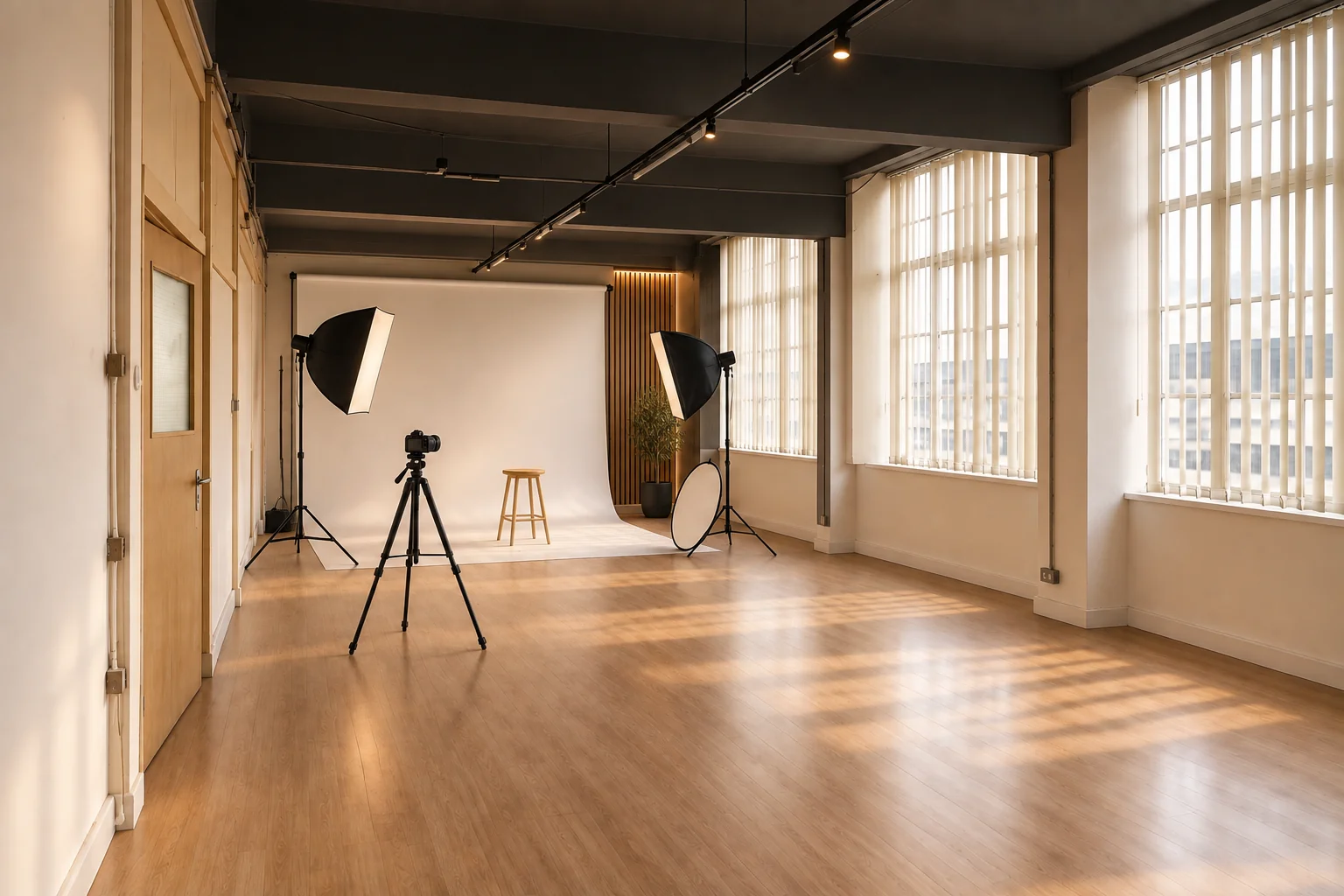
Photography studio hire in Leicester works best when the room, schedule and people all support a clearly defined result. A studio is more than somewhere to place a camera: it is the working environment in which a brief becomes a set of usable images or video. Whether you are planning portraits, fashion, product photography or branded content, the quality of your preparation affects how confidently the team can work once the booking begins. This guide takes you through the decisions that make a studio session productive, including the brief, duration, shot list, lighting and backdrop planning, team responsibilities and arrival checklist. It also explains the confirmed features of Studio A at Patmos, so you can decide whether the space fits your production before you book.
Start with the purpose, audience and final deliverables
Begin by writing one sentence that describes what the shoot must achieve. A portrait session may need a coherent set of images for a website and professional profiles. A fashion shoot may need a defined story across several looks. A product shoot may require clean catalogue frames alongside more expressive campaign images. The sentence should be specific enough to guide decisions while leaving the photographer room to solve visual problems. If several stakeholders are involved, agree this purpose before discussing props, clothes or individual poses.
Next, list the final deliverables in practical terms. Record the number of finished images or clips, their intended channels, likely crops and any fixed deadlines. A wide website banner asks for different framing from a vertical social post, and a talking-head clip requires a different rhythm from a still portrait. You do not need to dictate every composition, but the photographer should know which formats cannot be missed. Mark essential deliverables separately from optional experiments so the team can protect the core brief if a setup takes longer than planned.
Finally, identify who can approve decisions during the session. A single informed decision-maker prevents the production from pausing while different opinions are gathered remotely. That person should understand the brand, the brief and the limits of the booking. If feedback must come from someone elsewhere, agree when preview images will be shared and how quickly a response is required. Clear approval routes turn studio time into making time rather than waiting time.
Choose a booking duration that includes the whole working session
A realistic studio schedule includes more than the minutes spent pressing the shutter. Allow time to bring in the agreed items, prepare the first setup, test the lighting, brief the subject, move between looks and leave the space in order. Product shoots may require careful placement and repeated adjustments. Fashion and portrait sessions often include clothing, hair or makeup changes. Video work adds sound checks, rehearsals and additional takes. Build these activities into the duration rather than treating them as invisible preparation around the booking.
Estimate each planned setup, then add a sensible margin for transitions. The margin is not wasted time; it protects the quality of the work when a reflection needs controlling, a garment needs attention or a subject needs another take. If the brief contains several backgrounds, lighting styles or groups of products, compare the resulting schedule with the available budget. It is usually better to complete a smaller, prioritised list well than to rush a long list and lose consistency.
Studio A has a two-hour minimum booking and is listed from £30 per hour. Those confirmed terms give you a starting point, not an automatic answer for every production. A straightforward headshot brief and a multi-look content day place very different demands on the room. Share the scope with everyone responsible for the shoot, choose the duration against the actual workflow and make clear which items will move to a future session if time becomes tight.
Turn the brief into a prioritised shot list
A useful shot list describes outcomes rather than trying to control every creative decision. For each item, note the subject, framing, intended use and any required variation. For example, a portrait item might request one horizontal environmental frame for a web header, one vertical three-quarter portrait and one close crop. A product item might request a front view, a detail and one styled composition. This gives the team a shared definition of complete while leaving space for the photographer to respond to what works in front of the camera.
Order the list by production logic as well as importance. Group images that share a backdrop, lighting approach, subject or product arrangement. Avoid switching repeatedly between setups if the same group of frames can be captured together. Place the must-have images early enough that they are not dependent on an ambitious final setup. If a subject has limited availability, schedule their work first and capture empty scenes or product details afterwards.
Bring the list in a form that is easy to mark during the booking. A simple table with status, notes and filename references is often more useful than a dense mood board. The mood board can communicate visual direction, but the shot list tracks delivery. Assign one person to update it so the photographer and subject can stay focused. At the end of each setup, check the relevant essentials before changing the light or backdrop.
- Label every image as essential, useful or experimental.
- Note the destination and crop for each essential frame.
- Group shots that use the same subject, lighting and backdrop.
- Record approvals before dismantling a completed setup.
Plan lighting and backdrops around the visual problem
Lighting should begin with the desired result, not with a list of equipment. Decide whether the images should feel crisp and graphic, soft and approachable, dramatic or natural. Consider the texture, colour and reflectivity of the subject. Glossy products need careful control of reflections; portraits need attention to skin, glasses and the relationship between the subject and background. Share reference images for qualities such as contrast, direction and mood, and explain what you like about them instead of asking for an exact copy.
Studio A is a flexible, light-controlled studio with professional lighting and a backdrop system. These are useful confirmed features, but the creative plan still matters. Discuss the intended background colours and overall look before the booking, and confirm what the production needs to bring. Do not assume that a reference image can be recreated simply because it was made in a studio. The result also depends on styling, lens choice, subject position, post-production and the time available to refine the setup.
Keep the number of major lighting and backdrop changes proportionate to the booking. Each change includes physical adjustment, testing and a fresh round of small refinements. If variety is important, plan variations that can be achieved efficiently, such as changing subject position, wardrobe or crop while retaining the core setup. Reserve the most complex change for a result that genuinely adds value to the deliverables.
Prepare the people, wardrobe, products and props
Send the practical brief to everyone attending, not only the photographer. Include the session purpose, arrival plan, expected finish, responsibilities and the order in which people are needed. Subjects should know what they are being asked to do and how the material will be used. A calm, informed subject usually settles into the camera more quickly than someone who sees the concept for the first time on arrival.
For wardrobe, check fit, condition and how fabrics respond on camera. Bring agreed alternatives where a colour, pattern or texture may compete with the background. Studio A includes a changing and preparation area, which supports an organised workflow, but items should still arrive ready to use. Put complete looks together, label them in shot-list order and assign someone to notice creases, twisted collars, jewellery positions and continuity between takes.
Products and props deserve the same care. Clean products before packing them, bring duplicates of fragile or consumable items when available, and test anything that must operate during the shoot. Pack small tools that are specific to your objects or styling approach. The studio provides the setting described in its confirmed features; it cannot anticipate every fastener, cloth, stand-in object or brand-specific requirement. A modest production kit often saves more time than an elaborate concept that arrives incomplete.
Give every team member a clear role
Even a small shoot benefits from named responsibilities. The photographer leads image-making and technical decisions. A producer or client lead protects the brief and schedule. A stylist manages wardrobe, products or set details. An assistant may track the shot list, move agreed items and watch for continuity. One person can hold several roles on a compact production, but stating them prevents two common problems: everyone assuming somebody else is checking a detail, or several people giving competing instructions at once.
Agree how feedback will be delivered. Useful feedback connects an observation to the brief: the product label is not readable, the expression feels too formal for the audience, or the frame needs space for copy. Vague reactions slow the team because they do not identify what needs to change. Direct comments through the nominated decision-maker, and allow the photographer to translate the goal into an appropriate adjustment.
Protect the working area from unnecessary traffic and conversation. People who are not needed for the current setup can prepare the next item or review the completed list without crowding the subject. This is particularly helpful during video and content production, where concentration and repeatable takes matter. A tidy role structure is not about making a small shoot formal; it is about giving everyone enough clarity to contribute well.
Plan Leicester and East Midlands travel without guessing
For a Leicester studio booking, send the confirmed location and arrival instructions to every attendee from a single source. Ask people to check their own route close to the session date and to account for the items they are carrying. Do not build the schedule around an unverified journey estimate. Local conditions can change, and someone travelling with wardrobe or product cases may need a different plan from a subject arriving with a small bag.
Teams may be coming from Leicester itself or elsewhere in the East Midlands, including Loughborough, Nottingham, Derby and Coventry. When people start in different places, work backwards from the agreed call time and request an acknowledgement from each attendee. Keep phone numbers with the producer so a delay can be handled without interrupting the photographer. If the first setup depends on a particular product, subject or decision-maker, make that dependency visible in the call sheet.
Share only confirmed access information. This guide deliberately does not promise parking, travel times or facilities that have not been verified for a particular booking. If any attendee has a specific access need or is bringing unusually large items, raise it before confirming the production plan. Early questions are easier to solve than assumptions discovered at the start of paid studio time.
Use a final arrival and wrap checklist
The day before the booking, check that the creative brief, shot list, call sheet and contact details all show the same timing. Charge cameras, laptops and any production devices you are responsible for. Prepare storage and backup media appropriate to the project. Confirm that wardrobe, products, props and releases are packed. If you need to review frames with a stakeholder, test the method before arriving rather than troubleshooting it during the first setup.
On arrival, orient the team, place personal items away from the active set and walk through the schedule. Confirm the first priority and who can approve it. Allow the photographer to test before calling the first setup complete. During the session, mark the shot list and note any intentional changes to the brief. Keep used items separate from those still waiting to be photographed so nothing is missed or repeated accidentally.
Before leaving, verify that essential files have been captured and that the agreed items are accounted for. Pack methodically, remove production materials and leave enough time for the proper wrap within the booking. Record the next action for selections, editing and delivery while the decisions are fresh. A professional finish to the session makes the next stage of the project simpler and gives the team a reliable template for future shoots.
- Brief, shot list, call sheet and contact details aligned.
- Wardrobe, products, props and project-specific tools packed.
- Capture, storage and review devices prepared by the production.
- Essential shots checked before the final setup is cleared.
Decide whether Studio A fits the brief
Studio A at Patmos is designed for photography, video and content production, including portraits, fashion and product work. It is a flexible, light-controlled studio with professional lighting, a backdrop system and a changing and preparation area. It suits small production teams, has a two-hour minimum booking and is listed from £30 per hour. Studio A and Studio B are independent, so they can be booked by different customers at the same time.
Those facts help you compare the space with the practical needs of the production. The remaining questions should come from your brief: how many setups you need, what the team must bring, how long each stage will take and whether any requirement needs confirmation before booking. Avoid treating a facilities list as a substitute for a production plan. The strongest studio sessions pair an appropriate room with a clear scope and a prepared team.
When the brief, shot list and schedule are ready, review the Studio A service page and choose a booking duration that covers setup, shooting, transitions and wrap. Use the Studio A booking flow to check availability and reserve the photography studio for your Leicester production.
Useful answers
Questions about planning your booking
How long should I book a photography studio for?
Add the time needed for setup, lighting tests, every planned look, changes, checks and wrap. Studio A has a two-hour minimum, but the right duration depends on the number and complexity of your essential deliverables rather than the minimum alone.
What should be on a studio photography shot list?
Record the subject, framing, intended use, required crop and priority for each deliverable. Group items that share a setup, and distinguish essential images from useful variations and experiments so the team can protect the core brief.
What confirmed features does Patmos Studio A include?
Studio A is a flexible, light-controlled photography studio with professional lighting, a backdrop system and a changing and preparation area. It supports portraits, fashion, products, video and content production for small teams.
Can Studio A be used while the podcast studio is booked?
Yes. Studio A and Studio B are independent spaces and may be booked by different customers at the same time.