
A small brand launch does not need a large crowd to matter. It needs the right people, a clear reason to attend and a next step that feels natural. For a founder or creative team planning a Leicester launch, the venue is one part of a larger guest journey: invitation, arrival, introduction, demonstration, conversation and follow-up. This checklist helps organisers shape that journey and choose a flexible event space without making unverified promises about capacity, catering or production equipment.
Decide what the launch should change
Choose one primary outcome: introduce a product, invite early customers to try it, brief collaborators, gather useful feedback or create material for a wider campaign. A launch that tries to do all of these equally can become a sequence of disconnected moments. Write the one sentence guests should remember and the one action you want them to take afterwards.
Select guests because they can contribute to that outcome, not simply to fill a room. A compact event can feel more valuable when everyone knows why they are there. If media or partners are invited, give them accurate background information and a contact for factual questions. Do not claim availability, endorsements or results that have not been confirmed.
Design the guest journey from the door to the next day
Map the experience in order: how people are welcomed, where they learn what is launching, when they can ask questions, and how they will continue the conversation. Place the main message early enough that late-running informal chat does not swallow it. Leave enough time after the focal moment for guests to explore and speak with the team.
Write a short invitation that explains who the event is for, what attendees can expect, the confirmed timing and how to respond. Send practical details after confirmation and keep one person responsible for changes. After the event, follow up with the information or action promised, not a generic thank-you that leaves interested guests unsure what happens next.
Choose a layout that serves the message
A product demonstration, founder talk and networking-led gathering require different arrangements. Sketch where the central moment happens and how guests will move around it. If the event includes several modes, decide when furniture or materials must change and who will manage the reset. Keep the space legible; too many display points can dilute the main story.
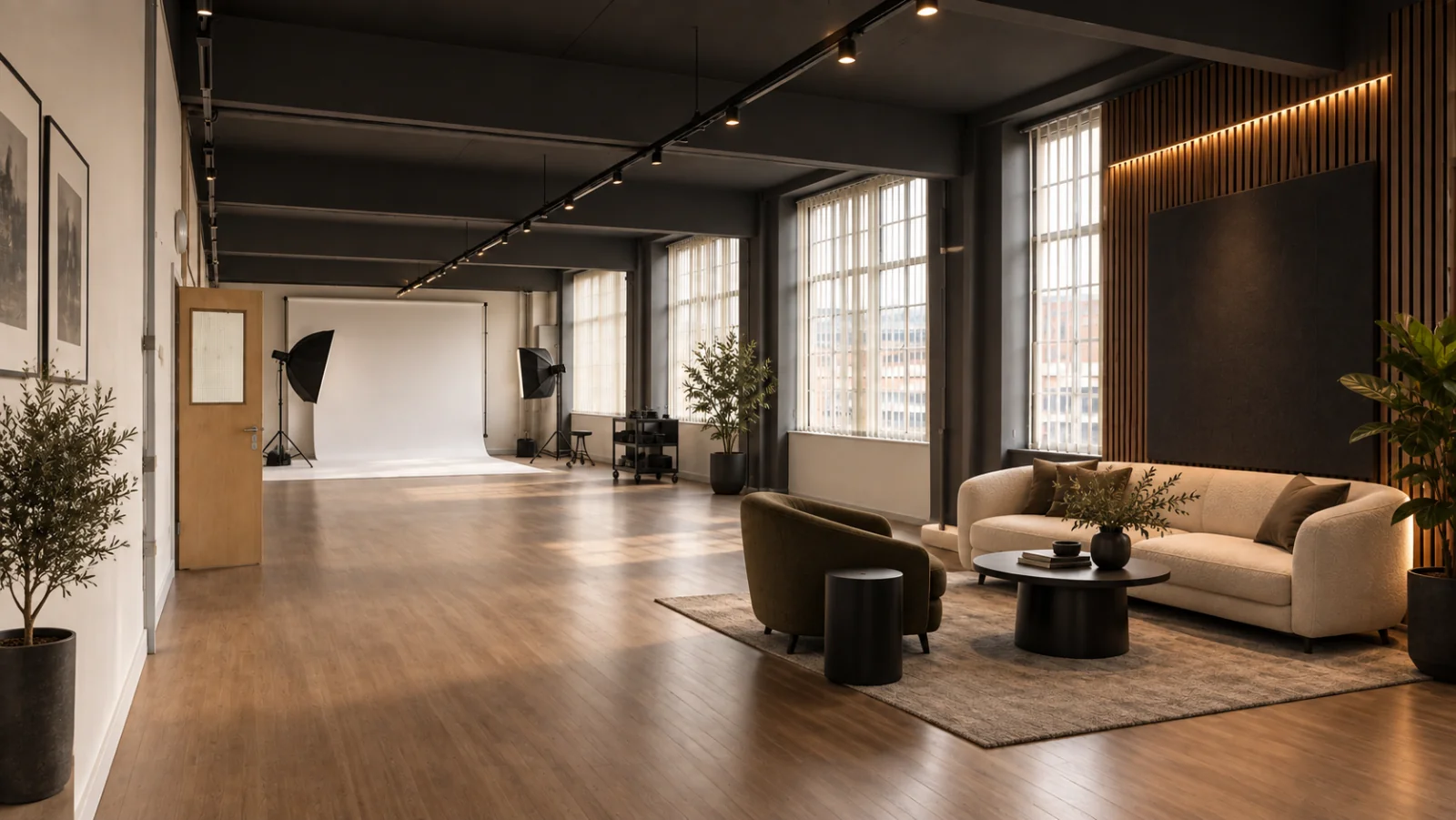
The Space at Patmos is a flexible studio floor for launches, workshops and intimate gatherings. It has a four-hour minimum and starts from £300. That flexibility can support a considered small event, but the organiser must confirm any specific capacity, furnishing, catering, equipment or accessibility requirement before making it part of the public invitation. Studio B remains a separate bookable room; The Space blocks Studio A because it uses the main floor.
Plan content capture without losing the event
Decide which moments are worth recording: the product in use, a concise founder explanation, the room before guests arrive or a few agreed portraits. Make a short capture list and assign responsibility. If the event relies on photography or video, confirm the person and permissions needed rather than assuming venue hire includes production or guest consent.
Avoid organising the whole evening around content capture. Guests are there for an experience, not to be background for a campaign. Give the capture team a clear window and keep the central interaction natural. After the event, label the material and note which claims, names or permissions need checking before publication.
Leave enough time for setup and a proper close
The booking should include organiser arrival, layout, checks, the guest-facing programme, final conversations and wrap. Build in a margin for a delayed arrival or a longer useful question. A launch that ends at the exact moment the room booking expires forces the team to choose between being present with guests and packing equipment.
At the end, record follow-up owners and dates: who sends product information, who answers questions, who reviews feedback and who checks any captured content. Those steps turn a small launch into a useful beginning. Review the Patmos creative-space and corporate-event pages for confirmed room information, then contact the studio about requirements that need a specific answer before you announce the event.
Useful answers
Questions about planning your booking
How do I plan a small brand launch event?
Define one primary outcome and message, invite the right people, map the guest journey, plan the focal moment and follow-up, and book enough time for setup and wrap.
What should I ask an event venue before announcing a launch?
Confirm the layout, capacity, access, furnishings, equipment, catering arrangements and exact booking window needed for your programme. Do not advertise unverified features.
Is a four-hour booking enough for a launch?
It may be, but count organiser setup, guest arrival, programme, conversation and wrap. The Space has a four-hour minimum; the right duration depends on the complete event plan.