
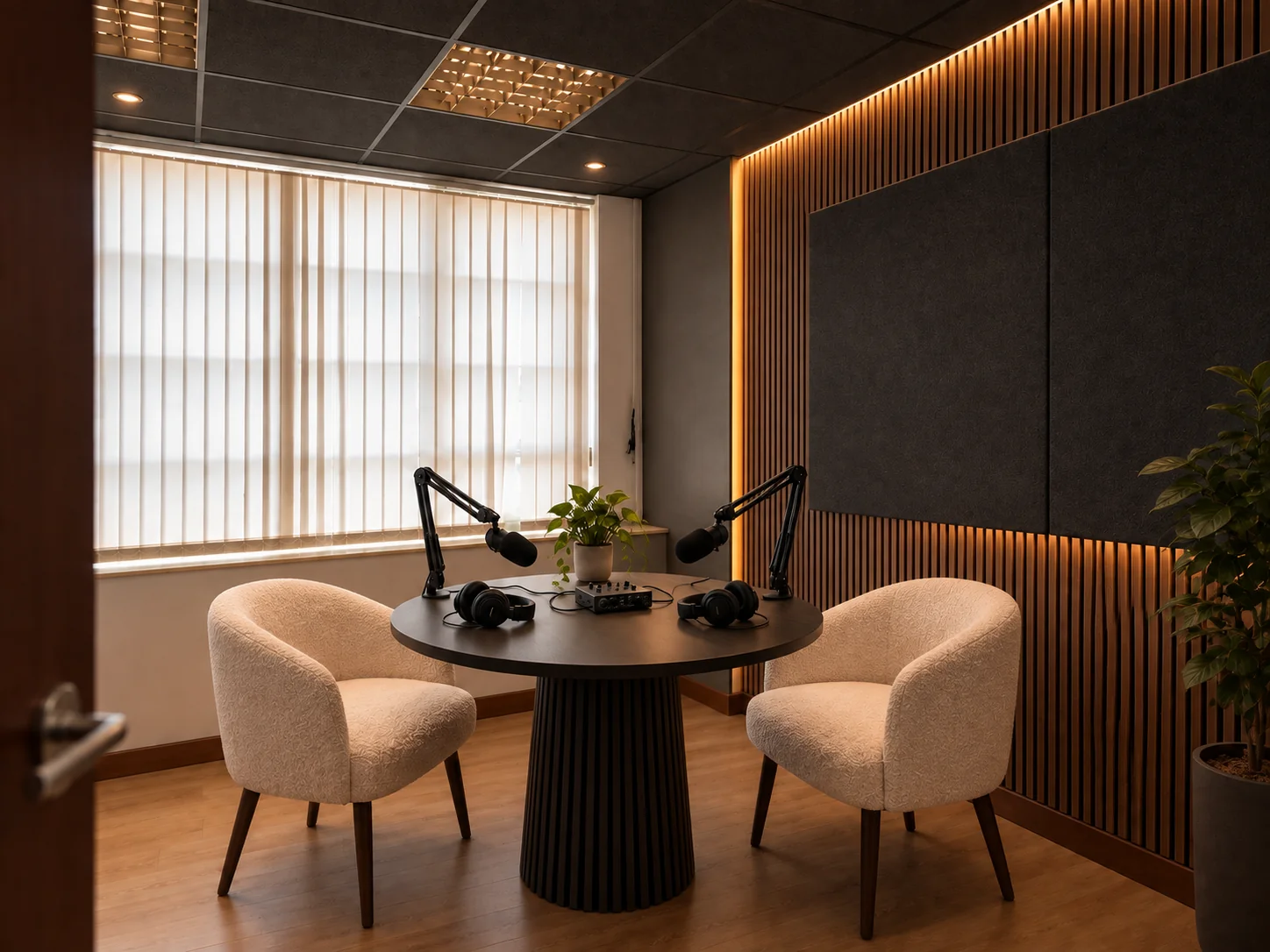
A video podcast adds a visual production to a conversation. Framing, lighting, capture and file handling need to work alongside a host's questions and a guest's attention. That does not require an elaborate format, but it does require clear decisions. This checklist is for East Midlands creators and organisations preparing a studio session, with Studio B at Patmos in Leicester as a reference. It separates the room's confirmed features from the camera, operator and post-production arrangements your project still needs to establish.
Before booking a video podcast, agree the final formats, speaker count, camera and audio responsibilities, complete session schedule and file handover. Studio B at Patmos in Leicester is listed from £40 per hour with a two-hour minimum and has a camera-ready set for up to four speakers. Confirm specific equipment and production services separately.
Which outputs should the recording plan serve?
List the finished pieces you intend to publish: a full episode, an audio version, short extracts or a course segment. Mark the essential outputs and separate optional ideas. Specify the intended viewing format and where text or graphics may sit, so the camera operator can frame appropriately. A horizontal conversation and a tightly cropped vertical extract may need different decisions during capture. Make those requirements visible before the session instead of assuming every frame can later be reshaped without losing something important.
Give the episode a clear audience promise and build the conversation around it. A useful video does not become stronger simply because it has more angles. Decide what viewers should learn and what examples the guests can offer. Prepare enough structure to keep the discussion focused while allowing natural answers. Share the output list with whoever will edit the material, because their practical needs can affect how introductions, pauses and short standalone explanations should be recorded.
Who owns the camera and audio decisions?
Name the person responsible for the recording arrangement. They should establish which cameras, lenses, media, power and connections the chosen format needs, and confirm what is available from the venue. Studio B's published features include podcast microphones, professional lighting and a camera-ready set, but that description does not establish camera hire or an operator as part of the room booking. If your team has no technical operator, resolve that responsibility before building the guest schedule around an unverified setup.
Ask the operator how they will check both picture and sound during capture. Agree whether the host can concentrate on interviewing or must handle a simpler recording workflow as well. For a production using several devices, decide how the files will be identified and brought together afterwards. Keep the setup within the team's competence. A reliable arrangement that everyone understands is more useful than a complex collection of equipment with no clear owner or tested handover process.
What should you confirm about the set and speakers?
Studio B supports up to four speakers and is intended for podcasts, interviews, courses and talking-head video. Confirm the number participating in your episode and explain any unusual format, such as a demonstration or repeated changes of guest. Do not assume the published speaker count describes every possible camera arrangement. The operator should check the planned framing and any essential set requirements with Patmos. Tell guests whether the session is filmed and what preparation will help them feel comfortable on camera.
Use reference images to explain the visual character you want, but identify the specific elements that matter. A clean background, consistent framing or space for on-screen captions is a clearer request than simply asking for a premium look. Check any proposed additions or changes with the venue. Studio B is independent of the main floor, and a room booking should not be treated as permission to use other areas for extra scenes. Plan additional spaces explicitly when the production needs them.
How should you schedule checks, recording and extra clips?
Begin with the full booked window and assign time to setup, a representative test, guest orientation, the main conversation, additional takes and wrap. The finished episode's running time is only one part of that schedule. Studio B is listed from £40 per hour with a two-hour minimum; the minimum does not specify how many finished pieces you can produce. Ask the operator and host to review the plan together so technical preparation and editorial ambition use the same realistic timeline.
Record a short test that includes the actual speakers and the planned visual arrangement, then review it before the main conversation. Check that the essential framing and sound requirements are met. Put optional clips after the core recording unless a guest's availability gives you a good reason to change the order. If time becomes tight, protect the complete episode and a proper file check. Adding several rushed extras is poor value when the central recording has not yet been verified.
How can you make the conversation easier to edit?
Give the host a clear sequence of themes and a short list of essential questions. Ask for specific examples, and allow guests to complete an answer before moving on. If a name or explanation needs correcting, pause and repeat the relevant section clearly rather than trying to repair it while everyone speaks at once. These habits help create usable material without making the exchange feel scripted. They also give the editor more understandable choices than a recording full of overlapping restarts.
Plan introductions and closing lines as deliberate pieces of the session. A short standalone summary can support a clip if it serves the audience, but do not force every answer into a promotional format. Keep notes of useful moments and any correction that must be respected during editing. Confirm who handles accuracy checks for names or specialist claims. The room provides a setting for capture; the editorial decisions and responsibility for the published programme remain part of your production process.
What must happen before equipment is packed away?
Give the recording operator time to confirm that the expected picture and sound material exists and to complete the agreed file process. Identify the files by episode, device or other consistent method appropriate to the setup. If the project uses separate audio and video, make sure the person editing knows how those sources relate. Do not assume that a visible recording indicator alone proves every required file is usable. The checks should follow the operator's tested workflow and happen while the team can still respond.
Agree who retains originals, who receives working files and what the next delivery will contain. Editing, captioning and publication should be assigned rather than inferred from room hire. Keep any guest-related restrictions or agreed review steps with the editorial notes. Finish the physical wrap within the booking and check your own equipment inventory before leaving. A clear handover turns the session into material that can be completed, instead of a collection of files whose ownership and purpose have to be reconstructed later.
What is the final booking checklist for Patmos?
Confirm the Leicester location with everyone attending, the number of speakers, the format, the technical operator and the complete access window. Check any camera or specialist equipment requirement directly and review the budget for production work outside room hire. If the project combines photography with recording, Studio A and Studio B can run independently together. The Space blocks Studio A while Studio B remains separate, so a wider programme needs the correct products and availability rather than one assumed all-inclusive booking.
Use the Patmos podcast service page to review Studio B, then check a date and duration that fits the full plan. Review the displayed total before reserving and circulate one final production note. Keep it practical: expected outputs, who attends, who operates, what is confirmed, what your team brings and who takes the files forward. After the session, compare that note with the work actually completed and use the lessons to simplify the next recording. Consistency comes from a clear repeatable process.
Useful answers
Questions about planning your booking
Are cameras included because Studio B is camera-ready?
Do not infer camera supply, operation or editing from that phrase. Studio B's confirmed features include a camera-ready set, microphones and professional lighting. Confirm the particular camera setup and production services your episode needs before making the reservation.
How long should a video podcast booking be?
Estimate setup, tests, guest preparation, recording, extra takes and wrap with the operator. Studio B has a two-hour minimum and is listed from £40 per hour. Final episode length alone is not a reliable measure of the room time required.
Can the same session produce an episode and social clips?
It can be planned that way, but the achievable outputs depend on your format, preparation and technical workflow. Prioritise the main episode, agree capture requirements with the editor and treat additional clips as scheduled production work rather than automatic extras.